Graphic Design Course Fees: What Influences the Cost and How to Choose the Right Course
Before enrolling in a graphic design program, one of the first questions most learners ask is about graphic design course fees. The cost of a course can vary depending on several factors, including the curriculum, duration, training format, software coverage, practical projects, and career support offered. Understanding these factors can help students make informed decisions and choose a program that aligns with their learning goals and budget.
However, evaluating graphic design course fees involves more than simply comparing prices. The true value of a course lies in the skills, practical experience, portfolio development, and career opportunities it can provide. This guide explores the key factors that influence graphic design course fees, what learners should look for in a program, and how to assess whether a course offers worthwhile long-term value.

Why Do Graphic Design Course Fees Vary?
Not all graphic design courses are the same. The difference in curriculum, learning experience, and career support can significantly impact graphic design course fees.
Course Duration
Longer programs generally cost more because they cover more topics, provide additional practice opportunities, and offer deeper skill development.
Curriculum Coverage
Courses that include advanced topics such as branding, UI/UX basics, portfolio development, and real-world projects may have higher graphic design course fees than basic software-only programs.
Training Format
Offline classroom training, live instructor-led sessions, and hands-on workshops often require more resources and support compared to self-paced learning formats.
Software Training
Programs that provide comprehensive training in professional tools such as Adobe Photoshop and Adobe Illustrator may reflect that value in their pricing.
Practical Projects
Courses that include live assignments and portfolio-building projects often provide a stronger learning experience and greater career readiness.
Career Support
Resume assistance, interview preparation, portfolio reviews, and placement guidance can influence graphic design course fees while adding long-term value for learners.
What Is Usually Included in Graphic Design Course Fees?
When evaluating graphic design course fees, it is important to understand what is included beyond classroom instruction.
A quality graphic design course may include:
- Design Fundamentals Training
- Adobe Photoshop Training
- Adobe Illustrator Training
- Branding and Logo Design Projects
- Social Media Design Projects
- Portfolio Development
- Practical Assignments
- Mentor Support
- Career Guidance
- Course Completion Certificate
Comparing the complete learning experience rather than focusing only on cost helps learners make better decisions.
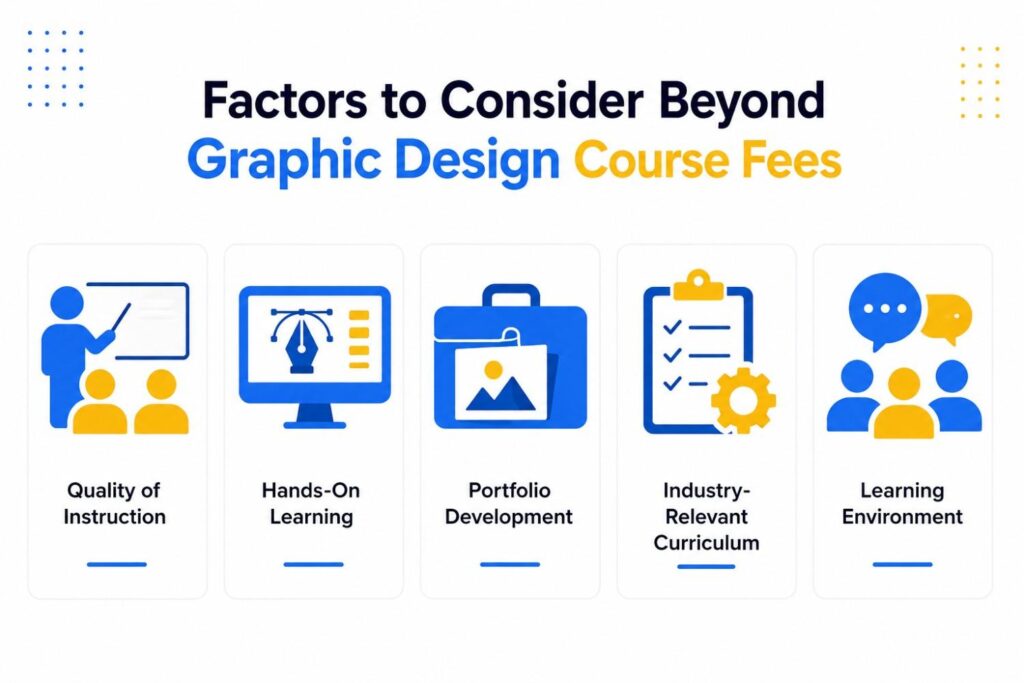
Are Higher Graphic Design Course Fees Always Better?
Not necessarily.
Higher graphic design course fees do not automatically guarantee better training. Some programs charge premium prices but offer limited practical exposure, while others provide excellent value through comprehensive training and hands-on experience.
When comparing courses, consider:
- Curriculum Depth
- Practical Assignments
- Trainer Expertise
- Portfolio Support
- Student Reviews
- Career Assistance
- Industry Relevance
The goal should be to identify the best value rather than simply choosing the lowest or highest-priced option.
How to Evaluate the Value of Graphic Design Course Fees
Before enrolling, ask yourself the following questions:
Does the Course Include Practical Projects?
Real-world assignments help learners develop confidence and practical skills.
Will I Build a Portfolio?
A portfolio is essential for demonstrating capabilities to employers and clients.
Are Industry Tools Covered?
Professional graphic design requires familiarity with industry-standard software.
Is Career Guidance Available?
Support with interviews, resumes, and portfolio presentation can increase employability.
Will the Skills Remain Relevant?
Choose programs that teach both foundational principles and modern design practices.
Evaluating these factors provides a clearer picture of whether the graphic design course fees represent a worthwhile investment.
Common Mistakes When Comparing Graphic Design Course Fees
Many learners focus only on pricing without considering the complete learning experience.
Choosing Based on Cost Alone
The cheapest option may not always provide the skills needed for career success.
Ignoring Portfolio Development
Without practical projects, learners may struggle to demonstrate their abilities.
Overlooking Career Support
Job preparation assistance can significantly improve career outcomes.
Not Reviewing the Curriculum
A detailed curriculum helps learners understand exactly what they will learn.
Skipping Student Feedback
Past learner experiences can provide valuable insights into course quality.
Benefits of Investing in Graphic Design Education
A well-structured graphic design program can offer long-term career advantages.
Improved Employability
Graphic design skills are valuable across numerous industries.
Freelancing Opportunities
Designers can serve clients independently and build flexible careers.
Creative Skill Development
Graphic design combines creativity with practical problem-solving.
Portfolio Creation
Projects completed during training become valuable portfolio assets.
Diverse Career Paths
Graphic designers can specialize in branding, advertising, social media design, packaging design, digital content creation, and more.
When viewed as a long-term investment, graphic design course fees often represent the first step toward professional growth and career development.
How Graphic Design Skills Create Career Value
The value of learning graphic design extends far beyond course completion.
Graphic design skills can help individuals:
- Build professional portfolios
- Secure entry-level creative jobs
- Transition into digital careers
- Launch freelance businesses
- Support entrepreneurial ventures
- Develop personal brands
- Expand career opportunities across industries
For many learners, the return on investment goes far beyond the initial graphic design course fees.

Looking Beyond Graphic Design Course Fees
While comparing graphic design course fees is an important step, learners should also understand what a complete graphic design training program includes. Factors such as practical projects, software training, portfolio development, classroom learning, and career support can significantly influence the overall learning experience and long-term value of a course.
To gain a broader understanding of graphic design training, course structure, and learning outcomes, explore our guide on Offline Graphic Design Course Thrissur.
Conclusion
Understanding graphic design course fees is an important part of choosing the right training program. While pricing varies based on curriculum, duration, training format, and support services, the true value of a course lies in the skills, experience, and career opportunities it helps learners develop.
Rather than focusing solely on cost, prospective students should evaluate practical training, portfolio development, industry relevance, and long-term career benefits. Investing in quality graphic design education can provide valuable creative skills and open the door to diverse professional opportunities in an increasingly visual and digital world. For a deeper understanding of professional design practices and visual communication, explore resources on graphic design and visual communication principles.
Frequently Asked Questions
Why do graphic design course fees differ between institutes?
Course fees vary based on curriculum depth, course duration, trainer expertise, practical projects, software training, and career support services.
Do graphic design course fees usually include software training?
Most comprehensive graphic design programs include training on industry-standard tools such as Adobe Photoshop and Adobe Illustrator.
Are certification programs more expensive than short-term courses?
In many cases, certification programs cost more because they offer broader curriculum coverage and additional project work.
Should I choose the cheapest graphic design course available?
Choosing a course solely based on price may not provide the best learning experience. Consider curriculum quality, practical training, and portfolio support.
What should I compare besides graphic design course fees?
Compare trainer expertise, projects, software training, certification value, portfolio development, and career guidance.
Is graphic design education a good investment?
Graphic design skills can support employment, freelancing, entrepreneurship, and creative career growth, making education a valuable long-term investment.
Do graphic design course fees include portfolio development?
Many quality programs include practical assignments and portfolio-building activities as part of the learning process.
Can I recover the cost of graphic design training through freelancing?
Many designers use their skills to secure freelance projects, which can help generate income and professional experience.
Are offline graphic design courses worth the additional cost?
Offline training often provides direct mentorship, classroom interaction, immediate feedback, and collaborative learning experiences.
How can I determine whether graphic design course fees offer good value?
Evaluate the curriculum, practical exposure, portfolio support, career assistance, and industry relevance rather than focusing only on the course price.