9 Powerful Future of Graphic Design Trends Shaping Tomorrow
The Future of Graphic Design is changing faster than ever before. From artificial intelligence and automation to immersive digital experiences, modern design is becoming more innovative, efficient, and user-focused. Businesses, creators, and brands in Thrissur and around the world are adapting to new technologies that are reshaping visual communication.
Understanding the Future of Graphic Design is important for designers, marketers, entrepreneurs, and anyone involved in creative work. As consumer expectations evolve, design is no longer limited to static visuals. It now includes interactive experiences, personalized content, motion graphics, and AI-assisted creativity.
This guide explores the most important developments, opportunities, challenges, and practical strategies that will define the Future of Graphic Design in the coming years.
What Is the Future of Graphic Design
The Future of Graphic Design refers to the evolving direction of visual communication influenced by technology, user behavior, design innovation, and market demands.
Traditional graphic design focused primarily on print materials and static digital content. Today, design extends across websites, mobile applications, virtual environments, social media platforms, and interactive experiences.
Key factors shaping the future include:
- Artificial intelligence tools
- Augmented reality experiences
- Virtual reality design
- Motion graphics
- Data-driven personalization
- Sustainable design practices
- User-centered design approaches
As technology advances, designers are expected to combine creativity with technical skills to deliver meaningful visual experiences.
Why the Future of Graphic Design Matters
The Future of Graphic Design affects nearly every industry. Effective design helps businesses communicate ideas, attract customers, and build stronger brands.
Growing Digital Presence
More companies operate online than ever before. Strong visual design helps businesses stand out in competitive markets.
Enhanced User Experience
Modern consumers expect seamless and engaging digital experiences. Designers play a critical role in creating intuitive interfaces.
Stronger Brand Identity
Consistent and memorable design strengthens brand recognition and customer trust.
Increased Market Opportunities
The growing demand for digital content creates new career paths and business opportunities for designers.
Major Causes Driving the Future of Graphic Design
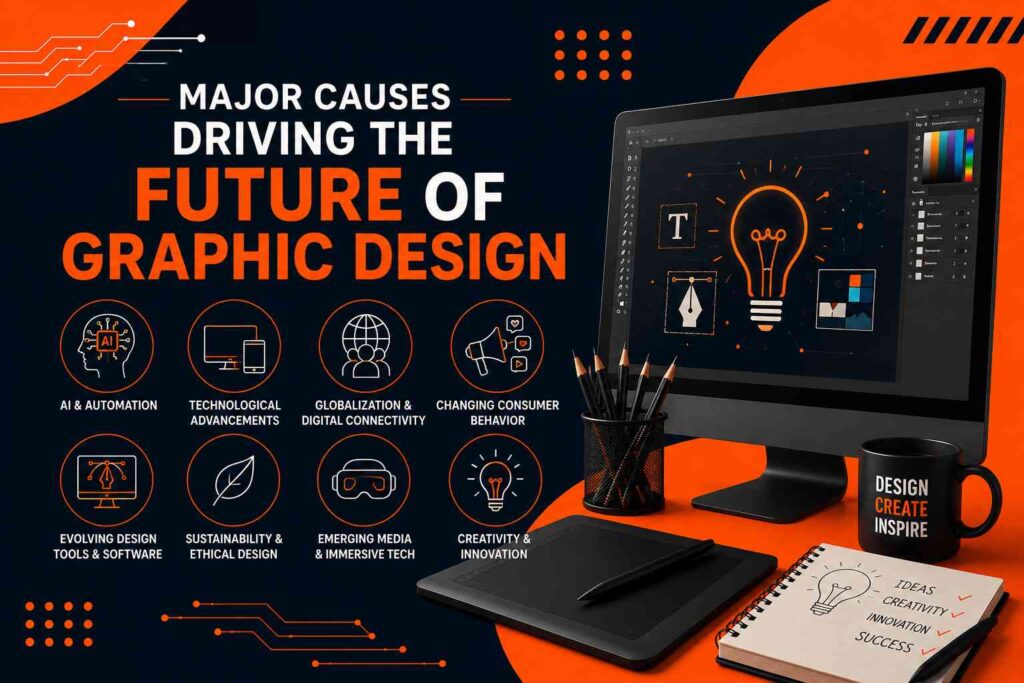
Several forces are accelerating changes in the design industry.
Technological Innovation
Advanced software and AI-powered design platforms are transforming workflows.
Consumer Expectations
Users increasingly expect personalized and interactive experiences.
Mobile-First Culture
Most digital interactions now occur on smartphones and tablets, influencing design priorities.
Global Competition
Businesses compete on a global scale, making high-quality visual communication essential.
Social Media Growth
The demand for engaging visual content continues to rise across social platforms.
Types of Graphic Design Expected to Grow
The Future of Graphic Design includes several specialized areas that are experiencing rapid growth.
1. Motion Graphics Design
Animated visuals capture attention more effectively than static images.
Applications include:
- Advertising campaigns
- Social media content
- Product demonstrations
- Website animations
2. UX and UI Design
User Experience (UX) and User Interface (UI) design remain critical components of digital products.
Benefits include:
- Better usability
- Improved customer satisfaction
- Higher conversion rates
3. AR and VR Design
Augmented Reality and Virtual Reality are creating immersive experiences across industries.
Common uses include:
- Retail visualization
- Education
- Gaming
- Training programs
4. AI-Assisted Design
AI tools help automate repetitive tasks and improve productivity.
Examples include:
- Layout generation
- Image enhancement
- Content recommendations
- Brand asset creation
5. Data Visualization Design
Businesses increasingly rely on visual storytelling through charts, dashboards, and infographics.
Key Trends Shaping the Future of Graphic Design
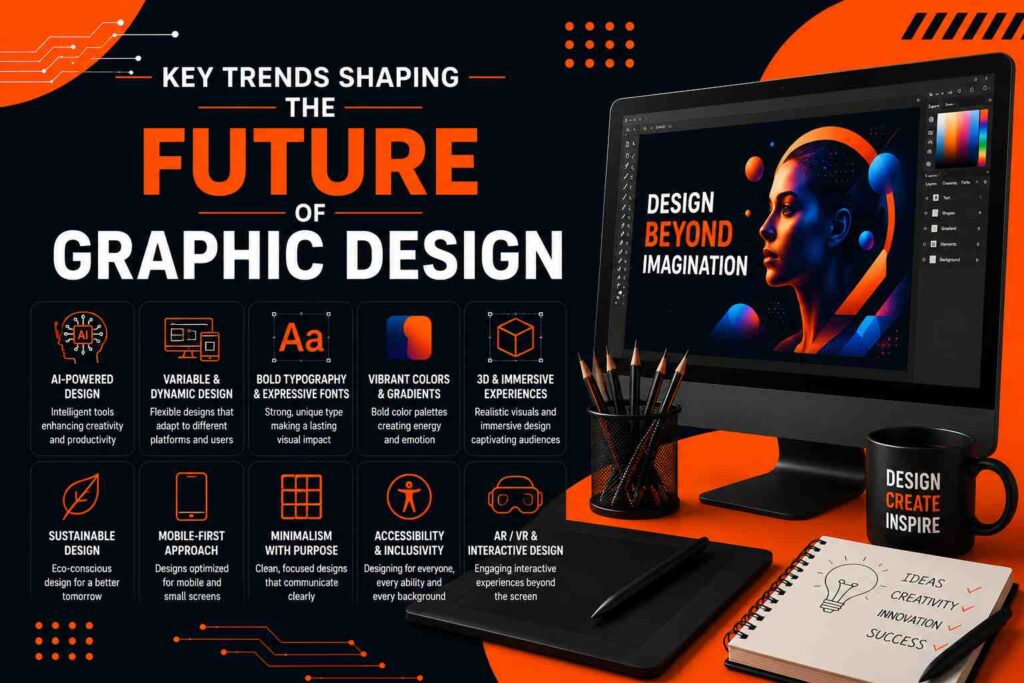
AI-Powered Creativity
One of the biggest developments in the Future of Graphic Design is artificial intelligence.
AI can assist with:
- Image generation
- Color selection
- Layout optimization
- Design recommendations
Rather than replacing designers, AI is becoming a collaborative tool that supports creative decision-making.
Personalized Visual Experiences
Modern audiences prefer customized content.
Designers are creating:
- Dynamic website elements
- Personalized advertisements
- Adaptive user interfaces
Minimalist Design Evolution
Minimalism remains popular but is becoming more sophisticated through strategic typography, whitespace, and micro-interactions.
Inclusive Design
Accessibility and inclusivity are becoming standard requirements.
Designers are focusing on:
- Readable typography
- Color contrast
- Screen-reader compatibility
- User-friendly navigation
Sustainable Design Practices
Eco-conscious design is influencing branding, packaging, and digital experiences.
Symptoms That the Industry Is Shifting Toward the Future of Graphic Design
Businesses and designers can identify industry changes through several indicators.
Increased Demand for Digital Content
Companies need more digital assets than ever before.
Rapid Software Updates
Design platforms regularly introduce AI and automation features.
Growing Focus on User Experience
Organizations invest heavily in UX research and interface improvements.
Expansion of Creative Technology Roles
New positions continue emerging at the intersection of design and technology.
Rising Need for Cross-Platform Design
Designers must create content optimized for multiple devices and channels.
Benefits of the Future of Graphic Design
The Future of Graphic Design offers significant advantages for professionals and organizations.
Improved Efficiency
Automation reduces time spent on repetitive tasks.
Better Creativity
Designers can focus more on strategic thinking and innovation.
Enhanced Collaboration
Cloud-based platforms support teamwork across different locations.
Greater Accessibility
Modern tools make professional-quality design more accessible.
Expanded Career Opportunities
Emerging technologies create new specializations and job roles.
Challenges in the Future of Graphic Design
While opportunities are abundant, several challenges exist.
Keeping Up With Technology
Design tools and trends evolve rapidly.
Increased Competition
Global access to design services creates a highly competitive environment.
Balancing Automation and Creativity
Designers must use technology without sacrificing originality.
Continuous Learning Requirements
Ongoing education is necessary to remain relevant.
Managing Client Expectations
Clients often expect faster delivery and more customization.
Future of Graphic Design and Artificial Intelligence
How AI Is Transforming Design
Artificial intelligence can analyze data, identify patterns, and generate design suggestions.
Common AI applications include:
- Logo concepts
- Marketing graphics
- Content layouts
- Image editing
Human Creativity Still Matters
The Future of Graphic Design will continue to depend on human insight, emotional intelligence, storytelling, and strategic thinking.
AI can assist the process, but creative direction remains a uniquely human skill.
Best Practices for Success in the Future of Graphic Design
Develop Multiple Skills
Combine design expertise with:
- UX principles
- Marketing knowledge
- Content strategy
- Basic coding skills
Stay Updated
Follow industry news and emerging technologies regularly.
Build a Strong Portfolio
Showcase diverse projects that demonstrate adaptability and innovation.
Focus on Problem Solving
Successful designers create solutions rather than simply attractive visuals.
Learn New Tools
Experiment with AI-powered software and emerging design platforms.
Practical Tips to Prepare for the Future of Graphic Design
To remain competitive:
- Master design fundamentals.
- Learn motion design techniques.
- Explore AI-assisted workflows.
- Study user experience principles.
- Develop communication skills.
- Stay informed about industry trends.
- Create personal projects.
- Network with other designers.
- Invest in continuous education.
- Embrace change and innovation.
The Long-Term Outlook
The Future of Graphic Design looks exceptionally promising. Businesses increasingly rely on visual communication to engage audiences and build trust.
Designers who combine creativity, technology, and strategic thinking will remain highly valuable. The profession is evolving rather than disappearing. New tools are expanding creative possibilities while opening new opportunities across industries.
As digital transformation continues worldwide, graphic design will play an even larger role in shaping user experiences, brand identities, and visual storytelling.
Conclusion
The Future of Graphic Design is driven by innovation, artificial intelligence, immersive technologies, personalization, and user-centered experiences. While technology is changing how designers work, creativity remains at the heart of successful design. Professionals who embrace new tools, continuously learn, and adapt to evolving trends will thrive in the years ahead. Whether you are a beginner or an experienced creative professional, understanding the Future of Graphic Design is essential for long-term success and growth in Thrissur and beyond. To understand the Future of Graphic Design, explore how industry-leading tools and AI-powered workflows are evolving through Adobe Creative cloud .
Frequently Asked Questions
What is the Future of Graphic Design
The Future of Graphic Design refers to how design evolves through technology, creativity, and changing consumer expectations.
Will AI replace graphic designers
AI is more likely to assist designers rather than replace them completely.
Which skills are important for future designers
Creativity, UX design, motion graphics, communication, and AI tool proficiency are increasingly important.
Is graphic design still a good career choice
Yes. Demand for visual communication continues to grow across industries.
How is AI affecting graphic design
AI improves efficiency through automation, design suggestions, and content generation.
What role does UX design play in the future
UX design helps create user-friendly digital experiences and remains highly valuable.
Why is motion graphics becoming popular
Motion graphics increase engagement and improve communication across digital platforms.
What industries need graphic designers
Marketing, technology, healthcare, education, retail, entertainment, and many others.
How can beginners prepare for the future of graphic design
Learn design fundamentals, build a portfolio, and stay updated with emerging technologies.
What is the biggest trend in the Future of Graphic Design
AI-powered creativity and personalized user experiences are among the most influential trends.