9 Powerful Reasons Why Choose a Digital Marketing Institute?
Why Choose a Digital Marketing Institute? This question matters to students, graduates, working professionals, freelancers, and business owners who want practical digital skills. Joining a structured program at a Digital Marketing Institute in Thrissur can help learners understand the subject step by step instead of depending on scattered tutorials. Digital marketing connects content, search engines, websites, advertising, social media, analytics, customer behaviour, and business strategy. A professional learning environment brings these areas together through guided lessons, assignments, projects, feedback, and career preparation.
Free resources can introduce ideas, but they rarely provide a complete learning sequence, guided practice, or personal feedback.
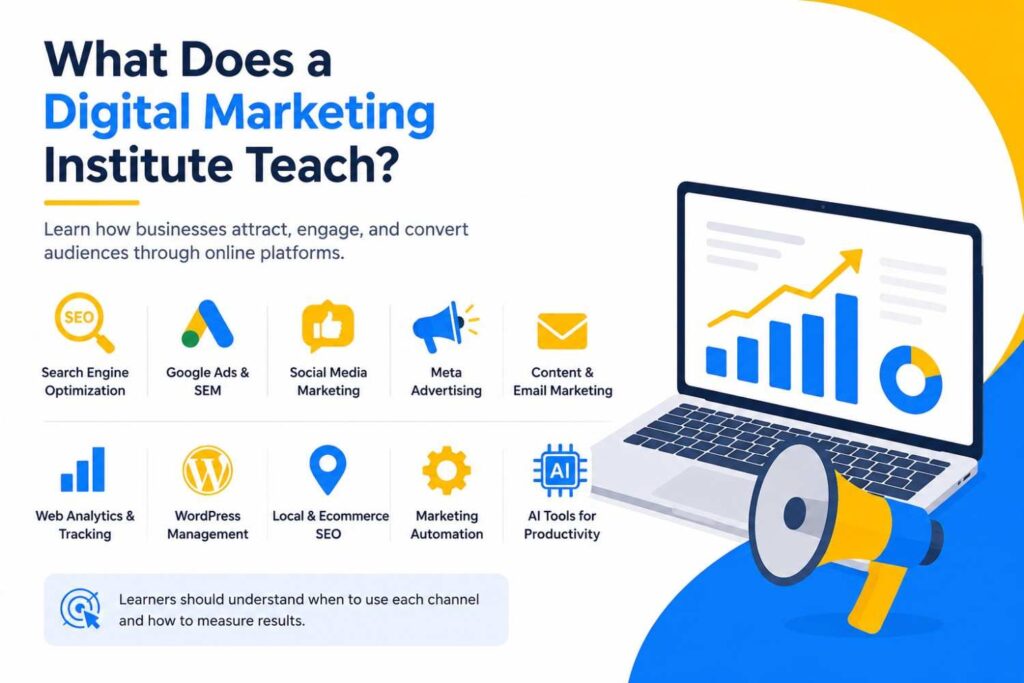
What Does a Digital Marketing Institute Teach?
A digital marketing institute teaches how businesses attract, engage, and convert audiences through online platforms. Training usually starts with marketing basics and moves towards campaign planning, execution, measurement, and improvement.
Common modules include:
- Search Engine Optimization
- Google Ads and Search Engine Marketing
- Social media marketing
- Meta advertising
- Content and email marketing
- Web analytics and conversion tracking
- WordPress website management
- Local and e-commerce SEO
- Marketing automation
- AI tools for research and productivity
Learners should understand when to use each channel and how to measure results.
Why Choose a Digital Marketing Institute Instead of Learning Alone?
Self-learning is useful, but beginners may follow outdated advice, skip key topics, or struggle to review their own work.
Why Choose a Digital Marketing Institute? A structured course gives learners a clear path. Trainers explain concepts, demonstrate tools, review assignments, correct mistakes, and connect theory with practical situations. Regular classes and deadlines also support consistency.
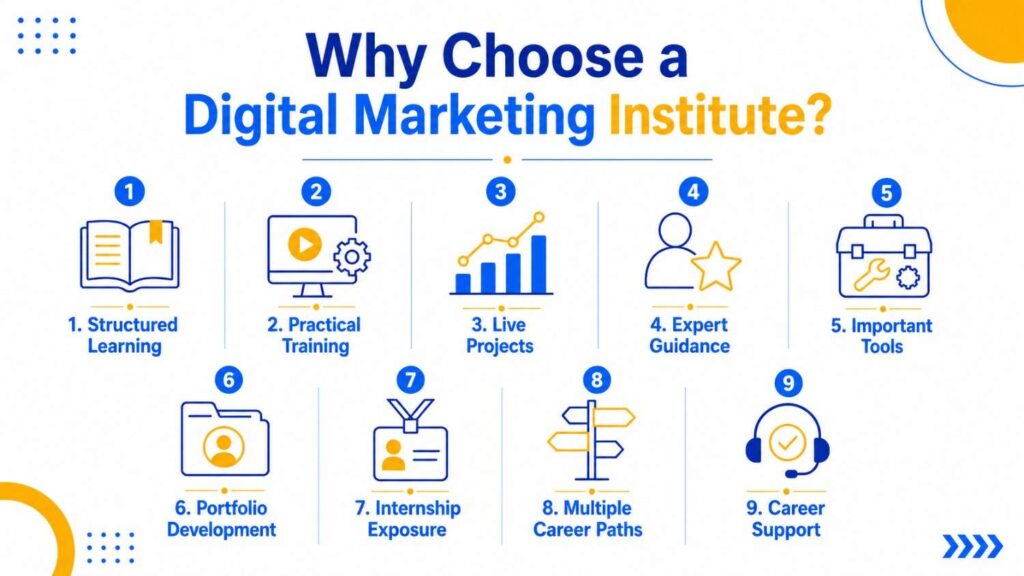
1. Structured Learning Builds a Strong Foundation
Digital marketing contains connected topics. SEO depends on content, websites, and analytics, while advertising depends on targeting, landing pages, tracking, and budgets.
A well-designed course normally moves through:
- Marketing fundamentals
- Audience and competitor research
- Website and content basics
- SEO and local search
- Paid advertising
- Social media marketing
- Analytics and reporting
- Portfolio and career preparation
This organised approach answers Why Choose a Digital Marketing Institute? Learners build knowledge in stages instead of collecting disconnected information.
2. Practical Training Turns Knowledge into Skill
Digital marketing cannot be mastered through theory alone. Reading about keyword research is different from preparing a keyword map. Watching advertising tutorials is different from building and reviewing a campaign.
Practical training may include:
- Creating or managing a WordPress website
- Performing keyword and competitor research
- Writing search-friendly content
- Auditing web pages
- Planning social media calendars
- Setting up sample campaigns
- Reviewing analytics reports
- Preparing client-style presentations
Why Choose a Digital Marketing Institute? Guided practice lets learners make mistakes safely and understand how to improve content, tracking, and reporting.
3. Live Projects Provide Real-World Exposure
Live projects let learners apply their knowledge to an actual website, campaign, or business requirement. They may research competitors, identify audiences, create plans, meet deadlines, and suggest improvements.
This is another reason behind Why Choose a Digital Marketing Institute? Live projects improve planning and problem-solving while producing portfolio samples.
4. Expert Guidance Helps Avoid Common Mistakes
Effective digital marketing requires strategy, tracking, testing, and responsible decisions.
Common beginner mistakes include:
- Choosing keywords without checking search intent
- Creating content without a clear audience
- Running ads without conversion tracking
- Focusing only on likes and followers
- Ignoring website speed and mobile experience
- Using every platform without a purpose
- Reporting numbers without explaining them
Why Choose a Digital Marketing Institute? Experienced guidance identifies mistakes early and shortens the learning curve.
5. Access to Important Tools Builds Confidence
Digital marketing uses tools for research, publishing, design, advertising, tracking, and reporting. Learners may work with Google Analytics, Google Search Console, Google Ads, Meta Ads Manager, Canva, WordPress, Google Tag Manager, SEO platforms, and AI productivity tools.
Students should understand how tools support research, campaigns, reporting, and decision-making.
This practical familiarity answers Why Choose a Digital Marketing Institute? Tool confidence helps with assignments, internships, interviews, freelance work, and entry-level roles.
6. Portfolio Development Supports Career Preparation
Employers and clients want evidence of practical ability. A certificate may show course completion, but a portfolio shows what a learner can do.
A useful portfolio may include:
- A website audit
- Keyword research
- An SEO content brief
- A social media strategy
- Sample ad structures
- Analytics reports
- Email sequences
- Landing-page copy
- A WordPress project
Why Choose a Digital Marketing Institute? Portfolio guidance helps students document projects and discuss real assignments confidently during interviews.
7. Internship Exposure Builds Workplace Understanding
An internship introduces learners to deadlines, reporting, teamwork, and client expectations.
Interns may assist with content publishing, website updates, keyword tracking, social media scheduling, campaign monitoring, competitor research, report preparation, and basic client communication.
Why Choose a Digital Marketing Institute? Internship support provides workplace exposure and reveals skills that need further improvement.
8. Multiple Career Paths Create Flexibility
Digital marketing is not a single job. It includes several specializations, so learners can choose an area that matches their strengths.
Possible roles include:
- Digital Marketing Executive
- SEO Executive or Analyst
- Social Media Executive
- Content Marketing Executive
- Content Writer or Copywriter
- Google Ads Specialist
- Performance Marketing Executive
- Email Marketing Specialist
- Web Analytics Executive
- E-commerce Marketing Executive
- WordPress Website Manager
- Digital Marketing Strategist
This flexibility explains Why Choose a Digital Marketing Institute? Students can explore different modules before choosing a specialization.
9. Career Support Improves Job Readiness
Technical skills are only one part of career preparation. Candidates also need a clear resume, interview confidence, professional communication, and an understanding of entry-level expectations.
Career support may include resume preparation, LinkedIn guidance, mock interviews, portfolio review, assignment practice, internship preparation, and job-search planning.
Why Choose a Digital Marketing Institute? Career support helps learners present their skills more effectively. Outcomes still depend on effort, project quality, communication, opportunities, and continued practice.
Causes Behind the Growing Demand for Digital Marketing Skills
The demand for digital skills has increased because many customer journeys now begin online.
Major causes include:
Increased Internet Use
More customer journeys begin with a search engine, social platform, map listing, marketplace, or review website.
Growth of E-commerce
Online stores need product content, search optimization, advertising, email campaigns, customer retention, and conversion improvement.
Measurable Marketing
Digital platforms provide data about impressions, clicks, leads, sales, engagement, and user behaviour. Businesses need professionals who can interpret this information.
Expansion of Local Search
Local businesses increasingly depend on maps, reviews, websites, and location-based advertising to reach nearby customers.
Rapid Platform Changes
Search algorithms, advertising systems, AI tools, privacy rules, and content formats change regularly. Continuous learning is essential.
These factors explain why current knowledge and regular skill updates matter.
Types of Learners Who Can Benefit
Digital marketing training can help people from many backgrounds.
- Students and Fresh Graduates
- Working Professionals and Career Changers
- Business Owners
- Freelancers
Signs You May Need Structured Training
Structured training may help when:
- You keep switching between tutorials.
- You understand terms but cannot apply them.
- You are unsure which tools matter.
- You cannot explain campaign results.
- You have no portfolio.
- You struggle to connect SEO, content, ads, and analytics.
- You need feedback and accountability.
- You want internship or career guidance.
These signs suggest that organised training may be useful.
How to Choose the Right Digital Marketing Institute
Before enrolling, compare institutes carefully.
Check for:
- An updated curriculum covering SEO, ads, social media, content, analytics, websites, and responsible AI use
- Practical assignments and project work
- Trainers with relevant industry experience
- Exposure to useful marketing tools
- Portfolio guidance
- Internship support
- Clear information about schedule, fees, modules, and assessment
- Realistic career guidance without exaggerated guarantees
The course should match your goals, time, and preferred career direction.
Conclusion
Why Choose a Digital Marketing Institute? The strongest reasons are structured learning, practical training, live projects, expert guidance, tool exposure, portfolio development, internship support, career flexibility, and job preparation. A well-planned program can replace confusion with a clear path and turn theoretical knowledge into practical ability.
For learners comparing a Digital Marketing Institute in Thrissur, the right choice should be based on curriculum quality, trainer experience, project exposure, transparent support, and realistic career guidance. Digital marketing changes constantly, so the most valuable outcome is not simply completing a course. It is developing the confidence, curiosity, and practical discipline needed to keep learning throughout a long-term career.
To further understand the fundamentals of graphic design principles and visual communication, learners can explore resources from globally recognized design education platforms.