HOW TO BUILD A GRAPHIC DESIGN PORTFOLIO
A strong portfolio is one of the most important tools for anyone entering the graphic design field. HOW TO BUILD A GRAPHIC DESIGN PORTFOLIO is a common question among students, beginners, freelancers, and aspiring designers who want to present their creative abilities professionally. A portfolio allows potential employers and clients to see your design skills, creative thinking, and ability to complete different types of projects.Whether you are interested in branding, social media design, print design, UI design, illustration, or advertising, a well-organized portfolio can communicate your abilities more effectively than a simple list of qualifications.Learning HOW TO BUILD A GRAPHIC DESIGN PORTFOLIO does not mean collecting every design you have ever created. The goal is to select your strongest work, present it clearly, and show how you approach design problems.
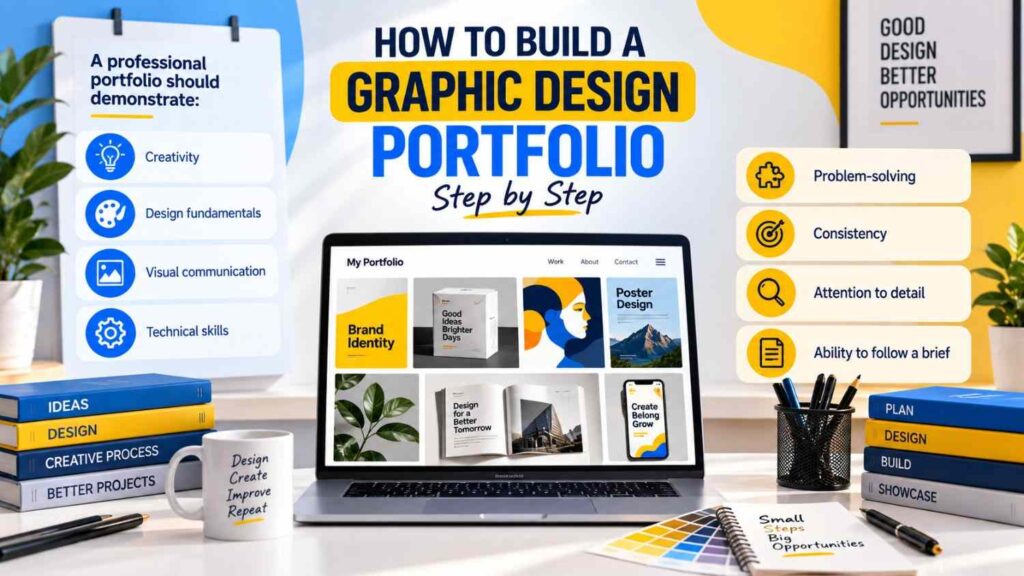
HOW TO BUILD A GRAPHIC DESIGN PORTFOLIO Step by Step
Building a portfolio becomes easier when you follow a structured process. Instead of adding projects randomly, think about what your portfolio should communicate about you as a designer.
A professional portfolio should demonstrate:
- Creativity
- Design fundamentals
- Visual communication
- Technical skills
- Problem-solving
- Consistency
- Attention to detail
- Ability to follow a brief
The following steps can help you create a portfolio that is clear, useful, and professional.
1. Decide Your Graphic Design Specialization
The first step in understanding HOW TO BUILD A GRAPHIC DESIGN PORTFOLIO is deciding what type of designer you want to become.Graphic design covers many areas, so your portfolio does not need to represent every possible specialization.
You might focus on:
- Branding
- Logo design
- Social media design
- Print design
- Packaging
- Advertising
- UI design
- Illustration
- Motion graphics
- Digital marketing creatives
For example, someone interested in branding can build a portfolio around logos, color systems, typography, brand guidelines, and identity applications.A social media designer can focus on campaign graphics, advertisements, carousel designs, promotional posts, and visual content.Choosing a direction helps employers and clients quickly understand your strengths.
2. Learn the Fundamentals of Graphic Design
Software skills alone do not create a strong portfolio.
A good designer needs to understand fundamental design principles such as:
- Balance
- Alignment
- Contrast
- Hierarchy
- White space
- Proportion
- Typography
- Color harmony
- Consistency
- Visual flow
These principles form the foundation of professional visual communication.The uploaded source also emphasizes these principles as essential concepts that help designers produce professional-quality work.When selecting portfolio projects, make sure your designs demonstrate these fundamentals rather than relying only on decorative elements.
3. Create Projects Specifically for Your Portfolio
One of the biggest mistakes beginners make is waiting for real clients before building a portfolio.You can create your own design projects.
For example, imagine a fictional coffee brand and create:
- Logo
- Color palette
- Typography system
- Business card
- Packaging
- Social media posts
- Promotional poster
You can also redesign an existing concept purely as a practice project, clearly identifying it as a personal or conceptual project.These projects demonstrate your ability to think through a complete design problem.
Create Different Types of Projects
A balanced portfolio may include several project categories.
For example:
Branding Project
- Logo
- Brand colors
- Typography
- Brand applications
Social Media Project
- Instagram posts
- Story designs
- Advertisement creatives
Print Project
- Brochure
- Poster
- Flyer
- Business card
Digital Project
- Website graphics
- Landing-page visuals
- Interface concepts
This gives viewers a broader understanding of your capabilities.
4. Choose Quality Over Quantity
When learning HOW TO BUILD A GRAPHIC DESIGN PORTFOLIO, remember that more projects do not automatically create a better portfolio.Ten excellent projects are generally more useful than thirty inconsistent ones.
Before adding a project, ask:
- Is this one of my strongest designs?
- Does it demonstrate a useful skill?
- Does it match my desired specialization?
- Is the presentation professional?
- Does it show something different from my other projects?
If the answer is no to most of these questions, consider leaving the project out.Your portfolio should feel carefully selected rather than crowded.
5. Show the Design Process
A finished design can show the final result, but showing the process can reveal how you think.This is particularly useful for branding, UI design, illustration, and complex creative projects.
You can include:
The Brief
Explain the design problem or objective.
Research
Show relevant research, references, audience considerations, or visual exploration.
Initial Ideas
Present sketches, wireframes, moodboards, or early concepts.
Development
Show how the design changed during the creative process.
Final Design
Present the finished result clearly.This approach turns a portfolio from a collection of images into a demonstration of your creative thinking and problem-solving ability.
6. Include Different Design Skills
A good answer to HOW TO BUILD A GRAPHIC DESIGN PORTFOLIO should also consider skill variety.
Your portfolio can demonstrate skills such as:
- Typography
- Layout design
- Photo editing
- Vector illustration
- Branding
- Color selection
- Digital composition
- Advertising design
- Packaging
- Social media design
You do not need to show every skill in every project.Instead, create projects that collectively demonstrate your range.
For example, one project can demonstrate typography, another can focus on photo manipulation, while another can demonstrate branding.
7. Use Professional Design Software
Your portfolio should demonstrate your ability to work with relevant design tools.
Common graphic-design applications include:
- Adobe Photoshop
- Adobe Illustrator
- Adobe InDesign
- Figma
- Canva
- CorelDRAW
The uploaded pillar page identifies these among commonly used graphic-design applications.You do not need to master every application before creating a portfolio.Start with the tools relevant to your chosen specialization and gradually expand your technical knowledge.For example, a branding designer may prioritize Illustrator, while an image-focused designer may spend more time developing Photoshop skills.
8. Present Your Projects Clearly
Knowing HOW TO BUILD A GRAPHIC DESIGN PORTFOLIO is only part of the process. How you present the work also matters.Avoid placing multiple unrelated designs together without context.
For every major project, consider including:
- Project title
- Project type
- Short description
- Design objective
- Your role
- Tools used
- Final visuals
- Relevant mockups
Use enough space around each project so the designs are easy to view.Good presentation allows the viewer to focus on your work instead of becoming distracted by unnecessary elements.
9. Create a Consistent Visual Style
Your portfolio should have its own visual identity.This does not mean every project needs to look identical.
Instead, maintain consistency in areas such as:
- Page structure
- Typography
- Image quality
- Spacing
- Navigation
- Project descriptions
- Mockup presentation
A consistent portfolio feels more professional and easier to navigate.At the same time, allow individual projects to demonstrate your ability to adapt to different design requirements.
Types of Graphic Design Portfolios
There is more than one way to present your work.
Online Portfolio
An online portfolio can showcase your projects through a personal website or portfolio platform.
It can include detailed case studies, project images, descriptions, and contact information.
PDF Portfolio
A PDF portfolio can be useful when applying for jobs or sending selected work directly to potential clients.
Keep the file organized and easy to view.
Social Portfolio
Platforms focused on visual content can also help designers display selected projects.However, your presentation should remain professional and consistent.
Personal Website
A personal website provides greater control over branding, navigation, project organization, and contact information.
What Projects Should a Beginner Include?
Beginners often ask HOW TO BUILD A GRAPHIC DESIGN PORTFOLIO when they have little or no professional experience.You do not need a long list of client projects.Start with practical self-created projects.
Consider including:
- A fictional brand identity
- A logo collection
- Social media campaign
- Poster series
- Packaging concept
- Editorial layout
- Website design concept
- Advertisement campaign
- Illustration project
- Photo-editing project
Clearly label conceptual work as personal or fictional projects.This allows viewers to understand that you are demonstrating your skills rather than claiming client experience.
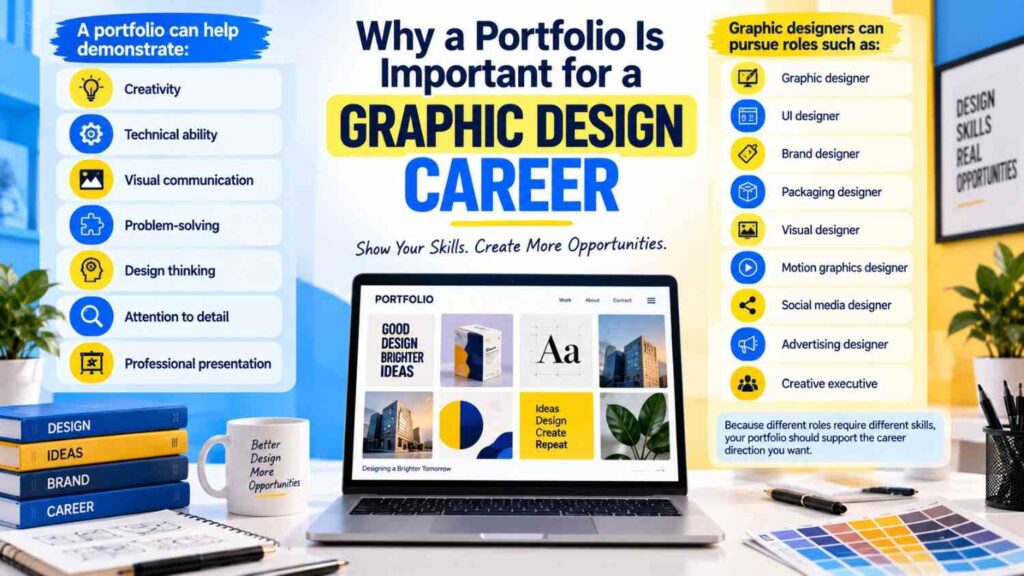
Why a Portfolio Is Important for a Graphic Design Career
A portfolio demonstrates practical ability.Qualifications can show that you studied design, but your portfolio shows how you apply that knowledge.
It can help demonstrate:
- Creativity
- Technical ability
- Visual communication
- Problem-solving
- Design thinking
- Attention to detail
- Professional presentation
Graphic designers can pursue roles such as graphic designer, UI designer, brand designer, packaging designer, visual designer, motion graphics designer, social media designer, advertising designer, and creative executive.Because different roles require different skills, your portfolio should support the career direction you want.
Conclusion
Learning HOW TO BUILD A GRAPHIC DESIGN PORTFOLIO is an important step toward developing a professional creative career. A successful portfolio is not simply a collection of attractive images. It should communicate your skills, creative thinking, design process, specialization, and ability to solve visual communication problems.Start with a clear career direction, create relevant projects, choose quality over quantity, explain your process, and present your work professionally. As your skills develop, continue replacing older projects with stronger work.Whether your goal is employment, freelancing, branding, digital marketing, UI design, illustration, or another creative field, a carefully developed portfolio can become one of your most valuable professional assets. If you are developing your graphic design skills in Thrissur, consistent practice, portfolio building, and continuous learning can help you prepare for future creative opportunities. Improve your understanding of graphic design fundamentals and visual communication by exploring the Nielsen Norman Group’s design resources .